Where is the Waitperson?

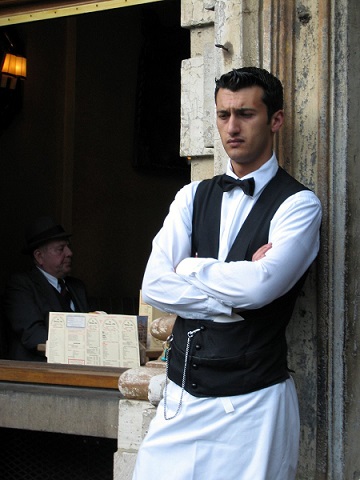
For a restaurant customer, one of the things that is most annoying is the disappearing waitperson.

Wait staff should always come back to the table after the order is delivered. First, they should check if everything is alright, and if the customer needs anything, and then they should return again later in the meal to check if the customer enjoyed the meal and would like to have something else.

This seems like a very simple thing, yet many restaurants I dine at or come across get this wrong every day. The only thing you can do is to train, retrain and observe carefully. This is an easy fix for many restaurants, yet many restaurants still get this wrong.

Every customer should receive a warm greeting when they enter your restaurant.

Every customer should be thanked for coming when they leave.

It is 10 times easier to retain an existing customer than to find a new one – and surveys often show that customers consider service and friendliness more important than food in a restaurant. Then why don’t all restaurants do this?

Your staff should be carefully trained on this skill. Being kind, warm and helpful will go a long way to building a loyal clientele and a successful restaurant.

Customer Service, Not Food, Is The Most Important Thing

Many people new to the business think that their restaurant will rise or fall on the basis of their food. But usually that isn’t the case. Yes it’s true that you don’t want to serve awful food. But think of a popular restaurant you know about where the food is ok, but the lines of customers are long. Why is that? Maybe it’s a convenient location, or very consistent quality. But more often than not, it’s because of the service of the staff.

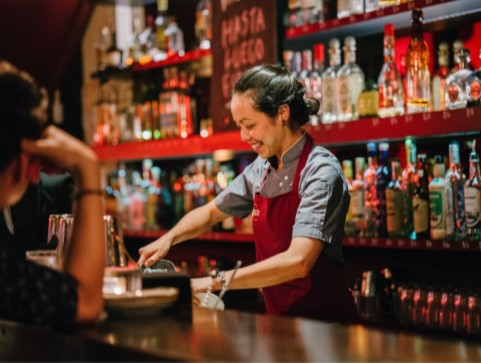
Staff who go out of their way to be friendly.
Staff who are helpful,
Staff who fix problems and
Staff who make the experience pleasant.

Unhelpful, surly waitstaff drag down the mood at any restaurant. In fact, unhelpful and unfriendly wait staff may be the main reason customers do not return to your restaurant.

Don’t let it happen to you.

It’s far easier to train an upbeat, fun person on restaurant service than it is to teach an experienced, grumpy person to be nice.

Your restaurant is only as good as your worst staff person.

There are plenty of great people out there who want to work in restaurants.

Find them, train them, and improve your sales.

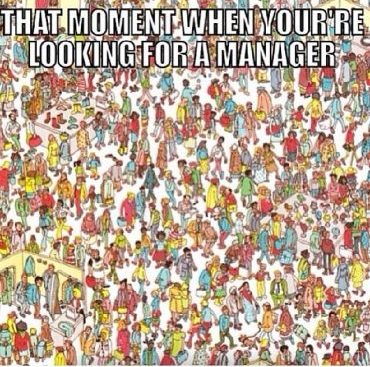
Where is the Manager?

How often have you walked into a restaurant where clearly no one is at home?

A manager may be there physically, but nothing is happening that would indicate that management is taking place.

You not greeted, you not asked for a drink order at the outset, the wait staff is slow in taking your food order, your meal arrives silently, you eat it (it’s acceptable but not memorable), you are never asked how things are going with the meal, and then suddenly the bill arrives. You pay and walk out with no one noticing you.

What I described above is not an isolated incident. Sadly, many people would say that’s their typical restaurant experience.

This is what managers are paid for — to teach their staff how to serve and to ensure customers have pleasant and memorable experiences.

Yet restaurants fail at this again and again.

Restaurants are hard work. The hours are long, the work is tiring, and it can be repetitive.

But if you as the owner don’t care enough about the restaurant to show up, why should your staff?

Owners often disappear when the sales start to fall, and the job starts to seem less fun. But of course, that is exactly the time when the owner is needed most.

No one is going to step up their game until their boss tells them to. The only person who can inspire and lead is the leader.

Absentee owners are a recipe for failure precisely because it is presence and leadership that can turn around a failing restaurant. Not an owner in hiding.

14 Ways to Market Your Restaurant

One of the keys to a successful restaurant is its Marketing.

Many people falsely believe that if they serve delicious food, people will discover them and they will become famous and popular.

But in fact, it rarely works out that way.

Marketing — the selling of what the restaurant offers — is in my opinion one of the single most important indicators of a restaurant’s success.

There are far more successful mediocre restaurants that market well than there are outstanding restaurants that don’t market.

You should have a marketing budget which includes both online and more traditional activities.

Some ways to market your restaurant include:

  1. Website
  2. Email marketing
  3. Facebook
  4. Other social media
  5. Bloggers
  6. Review Sites
  7. Influencers
  8. Online Reservation Tools
  9. PR
  10. Events
  11. Newspaper and Magazine ads (yes there is still a place for print advertising).
  12. Flyers
  13. Signage
  14. Comping (with care)

Be consistent and increase your sales

Even the best restaurant has ‘off’ days. But if you are more ‘off’ than ‘on’, business will suffer.

I believe that consistency is one ingredient to getting customers to come back. When a customer’s expectations are met again and again, they become loyal – and loyal customers are the core of any restaurant’s sales plans.

To gain some consistency in your restaurant operation why not consider the following:

Documentation.

The lack of consistency can often be traced to not writing things down. If you don’t have standard procedures, you cannot expect staff to deliver the same experience to customers each time:

* Job descriptions

* The restaurant org chart

* An operations manual

* A staff manual

* Shift set-up procedures

* Daily checklists

* Station set-up lists

* Lists of side work activities

Training.

You can’t have consistency with untrained staff so you need to develop a comprehensive training plan for the company. By creating a training manual, you can go a long way toward improving the consistency of service.

Recipes and Plating.

Two places where restaurants fall apart are inconsistent food, and inconsistent plating. All restaurants need written recipes, with exact procedures and exact quantities. There needs to be quality control in the kitchen, so when food begins to veer from the written recipe, it is pulled back to the original recipe. And if staff believe the recipe needs to change, that change needs to be put in writing.

Just as important is the plating of your food. Plating of food should be consistent. The chef should be checking every plate before it goes out and rejecting any substandard dish.

Feedback.

 If you are getting negative reactions to a dish or dishes that were once popular, something in the system is wrong. Either the recipe needs to be retested and rewritten, or the staff better trained on execution.

Your Competitors are Better than You Think They Are

Many restaurant owners enter a market assured that there is no direct competitor to their business or that the existing competitors are terrible and that a new restaurant will effortlessly blow them out of the water.

If only it were that simple ……

There is a reason why a restaurant has survived 3, 5 or 10 years, and has loyal customers.

Perhaps people love the food (even if you don´t).

Perhaps people are accustomed to the service (even if you find it lacking) … or

Perhaps, out of habit, people are just comfortable choosing your competitor.

Whatever the reason, you should never underestimate the competition, especially competition that serves the same cuisine, operates at the same price point or is physically close to your restaurant.

Instead you should visit the competition and take notes of how many customers are there? What are people ordering? What is the staff saying to customers and what are the customers saying?

At the same time, listen to customers in your own restaurant. Do they mention any of your competition during their meal — make sure that staff pass such comments back to you. By trying to understand why your customers also choose your competition, it may give you some valuable insight into how to make your restaurant better.

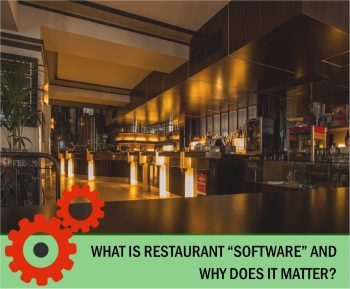
What is restaurant “software” and why does it matter?

Many restaurants look great. Beautiful decor, a lovely location, an attractive menu. But something feels off.

Maybe the lighting is wrong, or the music is terrible and the wait staff are grumpy, if not totally aggressive. The feeling of the restaurant is cold and negative. What’s wrong here?

I call this a ¨software¨ problem.

The hardware is the physical restaurant: the building, the interior decoration, the crockery, the menu. The software is everything else: the friendliness, the service, the music, the lighting, the feeling of being in the restaurant — or to use that overused word …. the vibe.

If the software is right, you are well on the way to having a winner. If the software is wrong, then I don’t think that a fantastic menu and a fantastic building in a fantastic location is going to save you.

Here a 4 things that can help you get the right vibe:

  1. Hire the right people.
  2. Pay attention to the music.
  3. Focus on the lighting.
  4. Create the right mood that builds energy in the space.

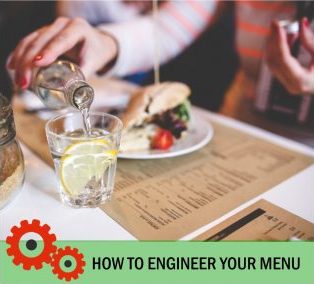
How to Engineer Your Menu

Over the years I’ve seen hundreds of menus, both as a customer and an advisor, and here are 7 of my thoughts on how to engineer a menu, taken from what I have seen and read in my travels.

The idea is to engage customers to spend more, and on the dishes you choose, and believe it or not, these work!

  1. Look at your item positioning on your menu – there are places the customer’s eye goes to — so put your best stuff there.
  2. Similarly consider using some boxes to highlight high margin menu items in an attempt to improve sales.
  3. I don’t like the use of $ dollar signs. You want your customer to think about the dining experience, and not just the price of the item.
  4. Along the same lines, think about whether you want cents in your pricing, eg. $9.95. If you have a fast food restaurant or takeaway then it may be appropriate; showing cents makes the customer think more about the price. Fine if you’re selling Burgers, but perhaps not if you’re selling Lobster.
  5. I’ve always liked the number 9 (and studies back me up here). So I wouldn’t think about charging $20 for something, when I could just as easily charge $19 and increase the sales of the item … profit margin permitting.
  6. Another counter-intuitive way to make a menu seem more affordable is to put something very expensive on it. Yes. Really. It’s called comparative pricing, and good restaurants use this technique to maintain margins on their big sellers. For example, if they want their customers to buy the $29 Oysters, they put the item next to a Seafood Platter for $79. They don’t sell many of the platters, but they sell a lot of Oysters. The same thing can work for wine lists — but ensure you put some cheaper items near the top as you want your customer to find something they can afford, rather than nothing at all.
  7. Consider embedding your prices in the menu listing. Instead of:

Roast Chicken                                  23

Filet Mignon                                     32

Just move those numbers left:

Roast Chicken  23

Filet Mignon  32

The easier it is for your customer to make a decision, the less time they’ll spend on it and the less they’ll second guess their choice.

These are just my thoughts on some menu engineering techniques, but it should give you an idea or two.

Renovate your restaurant without breaking the bank

It’s hard to keep a restaurant looking good. Restaurants suffer a lot of wear and tear; Floors get worn, tiles chip, and paint gets damaged and worn.

Customers don’t necessarily want to go to a run-down restaurant. So, if you’re facing a tired looking, shabby restaurant, what should you do?

A complete renovation could cost in the hundreds of thousands of dollars. What if your budget is much less?

One solution is to try a mini-renovation.

The advantages of going small are that …. first the budget is much smaller (great!) and second, you can renovate while keeping the restaurant open.

Here are some mini renovation ideas:

Paint, paint, paint — Paint is the cheapest, most high-impact renovation you can undertake. Painting covers up many problems — chipped surfaces, worn walls, etc … and by choosing modern colours, paint can modernise an out-of-date design.

Color — Put some pop into your restaurant with some bright color. That could include a feature wall, a bright coloured bar, or just some colorful artwork.

Refinish — If you have woodwork and it’s looking worn, just refinish it. You can refinish hardwood floors, a wooden bar or solid wood table tops. It’s relatively inexpensive and it will look great when done.

Upholstery — Chairs and booths don’t have to be replaced. You can have them recovered. Fresh upholstery can give your restaurant an entirely new look.

Art — Take down any tired, out of date pictures and replace them with more contemporary, bright artwork.

Lighting fixtures — adding a couple of new, modern-looking light fixtures can make a tired room look more inviting.

Plants and flowers — A nice flower arrangement will make any entrance look better…Plants can also soften the look of a plain, undecorated space.

Outdoors — There are a lot of things you can do to improve your outdoor spaces. Placing a couple of large planters can frame an entrance, and get passersby to notice you. New plants, shrubs and trees for your outdoor spaces can make them look like a place a guest will want to return to. A new firepit, or new brick surfacing outside can make your restaurant look more inviting and hip.

Remove the Clutter –this is the cheapest, fastest and easiest way to improve the look of your restaurant. Get rid of all clutter. That means old furniture, machines that aren’t working, big stacks of supplies, clutter on the bar or at server stations, anything in a cardboard box. Sell it, throw it away or put it in a storeroom, whether in the restaurant or off-site.

So whatever your budget, there is always something you can do to improve the look of your space.
Do your staff know how to handle complaints?

All restaurants get complaints, no matter how wonderful they are. So the issue really isn’t how to avoid getting complaints, but rather what to do when they happen.

Wait staff should never clear a table with an untouched dish without asking if there is a problem.

One strategy is the BLAST approach …

Believe. Believe what the customer is saying. Do not argue or get defensive. You do not need to always agree with the customer, but you should always accept that their experience is real for them.

Listen. Let them talk and fully explain what went wrong. Be empathetic. Often times just letting the customer vent for a minute will help defuse a situation.

Apologise. Being sorry goes a long way to fixing any problem. Be honest. If you have dropped the ball, admit it.

Satisfy. Make it right. Bring them a new dish. Give them a free dessert or a beverage, or both. Make them happy. And be fast about it. Step up when you first hear the complaint. Don’t avoid it because you don’t want a confrontation. You want the customer to be angry for as short a time as possible.

Thank. Thank them for coming. Ask them to come back. Tell them that you are delighted they are your customer. Make them want to return and have a positive experience.

If you follow the BLAST approach, you will satisfy the overwhelming majority of customers.

But accept that occasionally, a customer is just going to be mad. If you have made every attempt to fix the problem, and the customer is still angry, move on and try to do better next time.

LIABILITY LIMITED BY A SCHEME APPROVED UNDER PROFESSIONAL STANDARDS LEGISLATION